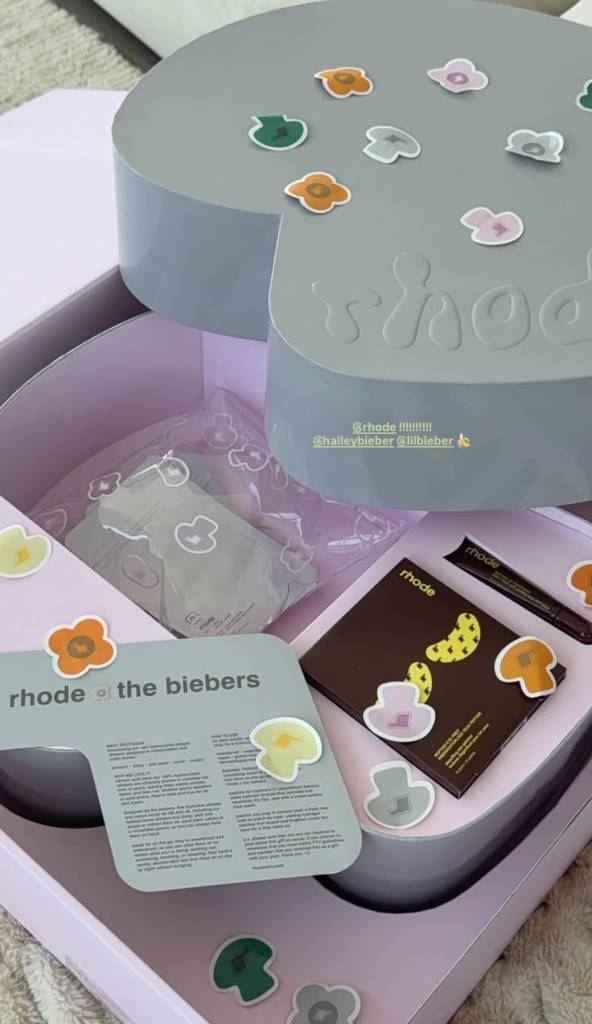
In April 2026, Rhode launched its first collaboration with Justin Bieber at Coachella. The drop was called Spotwear, a set of pimple patches in five shapes Justin co-designed. The obvious question is whether the husband of the founder counts as an influencer. The better question is what this campaign reveals about influencer marketing theory.
Where does Justin fit in the framework?
Rundin and Colliander (2021) published their Influencer Roles Typology in the peer-reviewed Journal of Advertising. WHAT, peer-reviewed academic article. WHO, marketing academics. WHEN, 2021. They sort influencer roles along two axes: product creation control (PCC) and content creation control (CCC). The framework produces three categories. Spokesperson. Cocreator. Co-owner.
On paper, Justin is a Codesigner, a Cocreator subtype. He has moderate PCC. He shaped five sticker designs and a banana-themed lip treatment scent. He did not formulate the product. He has high CCC. The campaign aesthetic is his. Easy classification.
Except it isn’t. That clean placement misses what is actually doing the work.
Where the theory bends
Rundin and Colliander built their typology when influencer meant external creator the brand pays. Justin does not fit that mould. There is no contract, no rate card, no exit clause. He is married to the founder, who is now Chief Creative Officer of a brand E.l.f. Beauty acquired for US$1 billion in May 2025. WHAT, official corporate announcement. WHO, e.l.f. Beauty. WHEN, May 2025. His fee is household income.
This pushes him toward the Facilitator subtype, which Rundin and Colliander reserve for Co-owners who build a close other’s venture through parasocial ties. But he is also co-designing products. That is Cocreator territory. The typology forces a choice the reality does not permit.
The framework also assumes parasocial ties run one way: creator to follower. Rhode’s audience has parasocial ties to both Biebers, and to their marriage as a unit. Call it relational context. The typology has no column for it.
Why it matters for the campaign
The strategic upside is exactly what the gap predicts. Glossy reported in January 2026 that Hailey’s 2025 strategy involves tapping faces beyond her own to launch products. WHAT, industry trade publication. WHO, beauty journalists. WHEN, January 2026. The closer the face, the lower the authenticity tax. No one suspects Justin was paid to like the product. The role is structurally trust-immune in a way the framework cannot price in.
The downside is also invisible. When the relationship is the campaign, brand risk and personal risk fuse. A tabloid story about the marriage becomes a Rhode story.
Reflection
The Influencer Roles Typology still does useful work. It forces marketers to be explicit about who controls what. But Rhode x The Biebers shows the framework was not built for the celebrity-founder era. The most powerful influencer might already live with the founder. Future revisions need a relational dimension, not just two control axes.
For Australian readers, Rhode’s Mecca debut in February 2026 was the retailer’s biggest launch ever. Whatever the typology calls Justin, it is working.


Leave a Reply