Think about the last time you opened a food app on the train home. You weren’t researching. You weren’t comparing. You wanted the usual, you wanted it in two taps, and if the app made you rebuild the order from scratch you probably closed it and ate at home. That tiny, impatient, half-distracted instant is not a footnote in mobile marketing. According to Google, it is the marketing, and a January 2026 McDonald’s engineering post shows a multinational rebuilding part of its app around exactly this instant.

The theory: marketing now happens in micro-moments
The Micro-Moments framework was introduced by Google in 2015. It argues that the predictable, sit-down “media session” has fractured into hundreds of short, intent-rich bursts in which a consumer reflexively reaches for a phone to act on a need. Google sorts these into four intents: the I-want-to-know, I-want-to-go, I-want-to-do, and I-want-to-buy moments. The strategic prescription is compressed into three demands on the brand, be there, be useful, be quick. This idea comes from “How Micro-Moments Are Changing the Rules”.
Why does this belong in a mobile-marketing discussion rather than a generic “consumer journey” one? Because the micro-moment is structurally a mobile phenomenon. Kaplan (2012) defines mobile marketing as activity through a ubiquitous network to which consumers are constantly connected via a personal mobile device. Strip out any one of those three properties and the micro-moment cannot exist: it needs the network to be everywhere, the user to be always reachable, and the device to be personal enough to act on impulse.
The example: McDonald’s rebuilds “Recents & Faves” (Jan 2026)
On 13 January 2026, the McDonald’s Technical Blog published “Reordering, Reimagined,” written by a McDonald’s product manager and an engineering tech lead. The team noticed that the app’s “Recents & Faves” reorder feature was barely used… yet the minority who did use it ordered more often and completed orders at a higher rate. Research traced the low usage to two faults: discoverability (fewer than half of tested users could even find the feature) and usability (it forced users to re-buy an entire past order, threw errors when items were unavailable, and lost customisations). The fix expanded product tiles, allowed item-by-item reordering, removed “dead” unavailable items, and critically re-architected the backend to cut total load time on subsequent launches by a reported 97%. Early reported results: fewer abandoned carts and stronger reorder adoption.
Reading the redesign through the theory
This is also where Kaplan’s lens adds something the four-intents taxonomy alone misses. The reason a one-second delay is fatal here is precisely that the user is constantly connected and the device is personal: the next option is always one swipe away, so the switching cost of abandoning McDonald’s for whatever else is on the home screen is almost zero. Friction on a personal, always-on device is not an inconvenience; it is a competitor’s opportunity.
Where the theory quietly breaks down
Here is the part the framework doesn’t handle as well and the McDonald’s data is what exposes it. Google’s model is built around the intent-rich moment: it assumes the consumer is, in that instant, deciding, evaluating, comparing, having “preferences shaped.” But the most valuable behaviour in the McDonald’s data is the opposite of a decision. The loyal user reordering “the usual” is not weighing options; they are running a habit and want deliberation removed entirely. The whole point of the redesign is to make the moment require less thought, not to win a richer one.
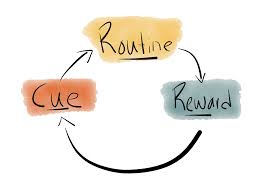
So the micro-moments framework describes the acquisition edge of the journey well (the first-time “I-want-to-buy” search) but under-theorises the retention core, where value compounds through low-effort repetition. A loyalty-loop or habit-formation lens (cue → routine → reward) arguably explains McDonald’s actual business case, “the customers who used these features were our most loyal” more directly than “be there, be useful, be quick” does. Google’s model tells you to win the moment; it is comparatively quiet on how to make the moment disappear into a habit, which is what a reorder feature is really for.
A second, sharper critique: the framework is almost entirely told from the brand’s side. “Be there” in the moment of intent is one short step from intrusiveness and the personalisation–privacy paradox flagged in this week’s material. McDonald’s app is on record using location even when closed; the same “be there” logic that justifies a helpful reorder prompt also justifies a geofenced push the user didn’t ask for. The theory gives marketers a strong reason to act and almost no language for when not to. That silence is a weakness worth naming, not a detail.
So what?
The McDonald’s case is useful precisely because it both confirms and strains the theory. It confirms that compressing latency and friction in a single intent moment is a defensible place to spend serious engineering money, a non-obvious claim that the 97% figure makes concrete. But it also shows that the framework’s headline metaphor (a “battle” for an intent-rich decision) fits the first purchase far better than the thousandth, where the real money is and where the goal is to make the decision vanish. For a digital marketer, the practical takeaway is to use micro-moments to find and instrument the highest-intent moment then borrow a habit/loyalty model to decide what to do with it once the customer comes back.
Sources
Ramaswamy, S. (2015), How Micro-Moments Are Changing the Rules
Think with Google. · Kaplan, A. M. (2012), If you love something, let it go mobile
Business Horizons 55(2). · McDonald’s Global Technology (2026), Reordering, Reimagined: Designing with Customer Data at McDonald’s, McDonald’s Technical Blog, 13 Jan 2026.
 Digital Marketing Blog
Leave a comment