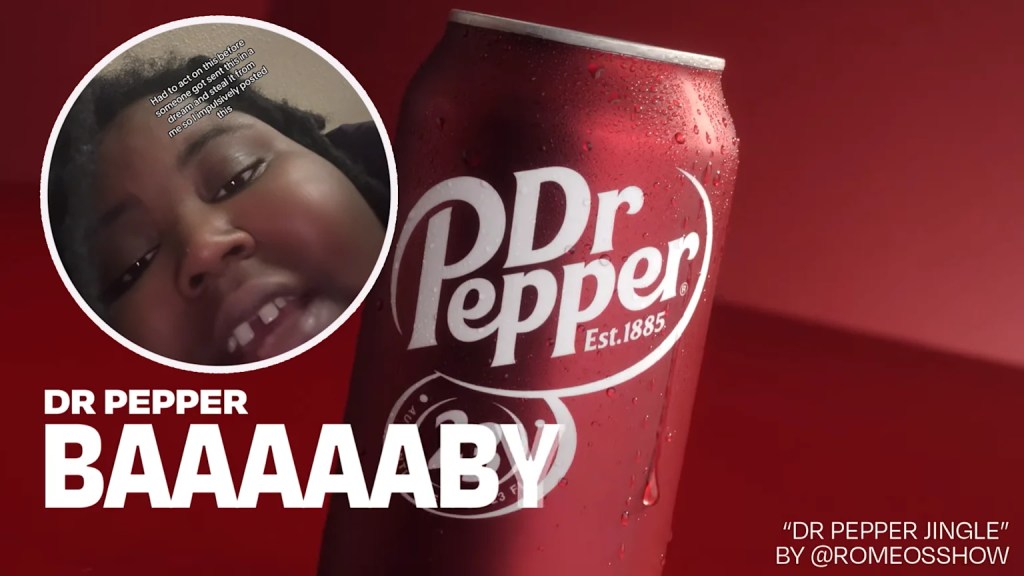
On 23 December 2025, a TikTok creator called @romeosshow sang seven words into their front camera. “Dr Pepper baby, it’s good and nice. Doo doo doo.” The clip ran for 11 seconds. The post had no edits and no brand brief. Within hours, Dr Pepper replied in the comments: “CHECK YOUR DMS.” By 19 January 2026, the jingle aired on national TV during the College Football Playoff Championship (NPR, 7 February 2026). The clip now sits at 125 million views. This post breaks down why it spread, how it spread, and where the textbook gets it wrong.
Why it spread: Berger’s STEPPS
Jonah Berger’s STEPPS framework comes from his 2013 book Contagious: Why Things Catch On. Berger is a Wharton marketing professor, so this source carries authority on the theory itself. Content spreads when it carries Social Currency, Triggers, Emotion, Public visibility, Practical Value, or Stories.
Romeo’s jingle hit four of these at once. Social Currency: you share it to be the friend who found the funny thing first. Triggers: Dr Pepper sits on every shelf and at every football game. Each sighting reactivates the earworm. Emotion: viewers feel high-arousal awe watching someone manifest a brand deal in real time. Stories: the meta-story (TikToker writes jingle, Dr Pepper slides into DMs, jingle ends up on TV) became more shareable than the original clip.
How it spread: Fox and Lind’s Replication Process
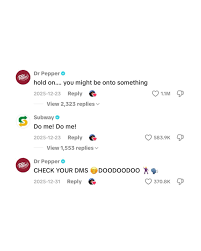
STEPPS explains why people share. Fox and Lind explain how content actually travels. Their 2020 article “A framework for viral marketing replication and mutation” appeared in the peer-reviewed journal AMS Review. Both authors are academic researchers. The article is under five years old. They name four stages: Attachment, Penetration, Replication, Release.
Romeo’s clip hit every stage. Attachment: an 11-second front-camera direct address stops the scroll. Penetration: the meaning decodes in under two seconds. Replication: Dr Pepper’s reply (“CHECK YOUR DMS”) plus pile-on comments from Indeed, Denny’s, Subway, Popeyes, and the Philadelphia Eagles (USA Today, 21 January 2026) turned the original into a template. Other creators began writing jingles for other brands. Romeo later made one for Hyundai. Release: TikTok’s “use this sound” button removed all friction. Final count: 125 million views, 5 million likes, 300,000 bookmarks.
Where the theory cracks
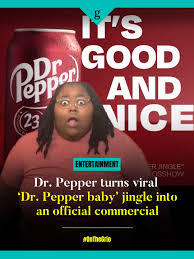
Of Berger’s six STEPPS, Practical Value is absent. The jingle teaches you nothing. It saves nobody money. It is, strictly, useless. Berger argues all six dimensions drive sharing. The Dr Pepper case suggests otherwise. In algorithmic short-form content, Social Currency and Emotion do most of the work. Useful content may actually underperform the absurd. Berger built the framework for the 2013 web. TikTok’s sound-and-remix economy rewards a different shape of content. The model still describes the engine. Not all six cylinders fire equally.
Reflection
Dr Pepper’s senior VP Ben Sylvan told AdAge that “the signal was so loud that ignoring it wasn’t really an option.” That sentence is the lesson. The most viral piece of Dr Pepper content in years was not made by Dr Pepper. The brand listened. The brand replied. The brand removed friction and let Fox and Lind’s replication cycle do the rest. In the creator economy, the smartest content strategy may be the one that knows when to stop creating.
Sources
Berger, J. (2013). Contagious: Why Things Catch On.
NPR. How one content creator’s Dr Pepper jingle grabbed the internet (7 February 2026)
USA Today. TikToker’s viral jingle featured in commercial (21 January 2026)


Leave a Reply